「四季の歌」は私が最初聞いた日本語の歌。中学の頃、音楽のクラスで聞いた。中国では有名だ。母もこの歌ができる。勿論、中国語版だ。
歌詞:
春を愛する人は 心清き人 菫(すみれ)の花のような 僕の友達
夏を愛する人は 心強き人 岩を砕く波のような 僕の父親
秋を愛する人は 心深(ふか)き人 愛を語るハイネのような 僕の恋人
冬を愛する人は 心広き人 根雪を溶かす大地のような 僕の母親
今から、このブログを書き続ける。誰も読まなくてもいい。
Wednesday, June 18, 2014

Monday, April 14, 2014
日本の大学
日本はいい大学が多いです。多分中国で一番有名なのは早稲田(わせだ)大学や東京大学です。でも、ほかのいい大学もあります。
私の日本に住んでいる友達は慶応大学で勉強しました。慶応大学は福澤諭吉が設立しました。
関西でも有名な大学があります。例えば、京都大学や大阪大学です。そして、「関関同立」があります。つまり、関西大学、関西学院大学、同志社大学と立命館大学です。この四大学は関西の有名な私立大学です。時間があったら、絶対訪問に行きます。


私の日本に住んでいる友達は慶応大学で勉強しました。慶応大学は福澤諭吉が設立しました。
関西でも有名な大学があります。例えば、京都大学や大阪大学です。そして、「関関同立」があります。つまり、関西大学、関西学院大学、同志社大学と立命館大学です。この四大学は関西の有名な私立大学です。時間があったら、絶対訪問に行きます。
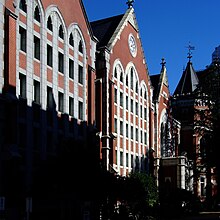
慶応大学の図書館旧館(きゅうかん)
(http://ja.wikipedia.org/wiki/%E6%85%B6%E6%87%89%E7%BE%A9%E5%A1%BE%E5%A4%A7%E5%AD%A6)
福澤諭吉
(http://riyuginnuma.blog.fc2.com/blog-entry-12.html)
Friday, April 11, 2014
Monday, March 3, 2014
名探偵コナン
多分推理小説(すいりしょうせつ)をたくさん読みますで、特にシャーロック ホームズシリーズがとても好きですから、「名探偵コナン」は私が一番好きな日本の漫画作品(まんが さくひん)です。とても綺麗で、おもしろいです。子供の時から見ます。今までもう十年ですね。

(http://momovieslove.blogspot.com/2012/05/200th-episode.html)
上の絵に、江戸川(えどがわ)コナンや毛利蘭(もうりらん)や灰原哀(はいばらあい)や服部平次(はっとりへいじ)がいます。

(http://119.245.176.28/app-def/S-102/wp/?p=802)


(http://www.mosta2bal.com/vb/showthread.php?t=1603)
(http://jp.hjenglish.com/new/p417812/)
服部平次は大阪から来ましたから、関西弁で話します。関西弁は大阪や奈良や京都の方言(ほうげん)です。とてもおもしろいですね。特に、「よお工藤!元気にしとったかー?」と言う時、可愛いですね。肌(はだ)が黒いですが、頭がいいですよ。
Monday, February 17, 2014
About communication
Q1: What do you expect to learn from the podcast project?
1. How to make a video;
2. How to learn Japanese by myself beyond class;
3. How to apply what I learned in class to the real communication with other Japanese speakers;
4. How to communicate effectively with my teammates as well as with people outside;
5. The Japanese culture in NY.
Q2: What does "communication" mean to you?
In this case, it means on the one hand the interaction with my teammates in the project. It is always hard to unify the opinions of different people but at least we can come to agreement after communication.
On the other hand, it means our communication with outsiders in the video. Obviously, we will inevitably encounter and talk with strangers in the project, such as waiters, restaurant owners and so forth. It is a quite challenging work for us, since we are only beginners with Japanese. But it is also the situation that will drive us to figure out different ways of communication with them.
1. How to make a video;
2. How to learn Japanese by myself beyond class;
3. How to apply what I learned in class to the real communication with other Japanese speakers;
4. How to communicate effectively with my teammates as well as with people outside;
5. The Japanese culture in NY.
Q2: What does "communication" mean to you?
In this case, it means on the one hand the interaction with my teammates in the project. It is always hard to unify the opinions of different people but at least we can come to agreement after communication.
On the other hand, it means our communication with outsiders in the video. Obviously, we will inevitably encounter and talk with strangers in the project, such as waiters, restaurant owners and so forth. It is a quite challenging work for us, since we are only beginners with Japanese. But it is also the situation that will drive us to figure out different ways of communication with them.
Monday, February 10, 2014
好きな音楽
私は ピアノを 弾くことが できますから、音楽が 好きです。六年ピアノを習いました。とても大変でしたが、おもしろかったです。ピアノから 音楽を たくさん知っていますから、クラシック音楽を とても好きです。

クラシック音楽の中で ベートーヴェンの作品(さくひん)が 一番好きです。ベートーヴェンは とても大切なドイツの音楽家でした。ベートーヴェンの作品の中で 月光(げっこう)ソナタが 一番綺麗です。私は 第一楽章(だいいちがくしょう)を弾くことできます。

今、ポップミュージックも聞きます。英語の歌と中国語のと日本語の聞きます。日本の歌手(かしゅ)は中孝介(あたり こうすけ)が 好きです。そして、倉木麻衣(くらき まい)の歌も 綺麗ですよ。

Monday, February 3, 2014
冬休み
去年冬休みに カリフォルニアへ 旅行に 行きました。サンフランシスコ と ロサンジェルスへ 行きました。サンフランシスコで ゴールデンゲートブリッジを 見ました。ゴールデンゲートブリッジは 漢字で 金門橋です。金門橋は 長くて、背が 高かったです。赤くて、綺麗でした。あそこの食べ物は とても おいしかったです。
それから、ロサンジェルスへ 行きました。あそこのビーチが 好きでした。海は ニューヨークのより 青かったです。カリフォルニアに 十日 いました。あの旅行は 素敵でした。


それから、ロサンジェルスへ 行きました。あそこのビーチが 好きでした。海は ニューヨークのより 青かったです。カリフォルニアに 十日 いました。あの旅行は 素敵でした。
Sunday, December 1, 2013
Literary Work (final)
ワイトさん は アメリカ人です。そして、今コロンビア大学の学生です。
東京 は とても 大きく ないですが、にぎやか でした。浅草寺 は 古くないですが、すでき でした。あそこの 桜 は も 綺麗でした。 多くの人 は お花見に いきました。午後、ワイトさん は 疲れくないです、そして 腹が すきました から、東京チカラめし で 食事しました。東京チカラめし は 有名な レストラン でした。あそこの 食べ物 は おいし くないです。


それから、ワイトさん も 東京タワー へ 行きました。東京タワー は 高くないです。冬、東京タワー で ダイヤモンド富士 を 見ます。富士山 は 日本で 一番 有名な山 です、そして 一番 たかいです。


それから、ワイトさん は 秋葉原ガチャポン会館 で 買い物しました。あの店 は 高くないですが、ものは よくないです。

Rationales:
I wrote the trip story in Tokyo for two reasons. First of all, I wanted to write a tour guide for myself and for anyone who wants to travel there. It is a really amazing place. Secondly, I want to illustrate that Katakana is frequently used by Japanese people even if it is unnecessary to use it. It is more like a fashion than a necessity.
Katakana word list:
ワイトさん Mr. White
アメリカ人 American
コロンビア大学 Columbia University
東京チカラめし A famous restaurant in Tokyo
レストラン Restaurant
東京タワー Tokyo Tower. it is the second-tallest artificial structure in Japan, painted white
and red and international orange to comply with air safety regulations.
and red and international orange to comply with air safety regulations.
ダイヤモンド富士 Diamond Fuji (Mountain). "Diamond Fuji" is the name given to the setting sun meeting the the Summit of Mt. Fuji. This spectable is visible from many places in Japan in certain times of a year. The Tokyo Tower is one of the places.
ガチャポン会館 It is a comic store in 秋葉原, which is famous for comics shops and electronics shops.
ガチャポン会館 It is a comic store in 秋葉原, which is famous for comics shops and electronics shops.

Monday, November 25, 2013
About me (cont'd)
初めまして。私はニューヨークに一年半います。1っか月に二回セントラルパーク行きます。秋のセントラルパークは夏のセントラルパークより綺麗です。あそこは紅葉が一番すてきです。来月カリフォルニアへ旅行に行きます。
Sunday, November 17, 2013
Literary work (draft)
ワイトさん は アメリカ人です。そして、今コロンビア大学の学生です。
東京 は とても 大きく ないです、そして にぎやが でした。浅草寺 は 古くないですが、すでき でした。あそこの 桜 は も 綺麗でした。 多くの人 は お花見に いきました。午後、ワイトさん は 疲れくないです、そして 腹が すきました から、東京チカラめし で 食事しました。東京チカラめし は 有名な レストラ
ン でした。あそこの 食べ物 は おいし くないです。
ン でした。あそこの 食べ物 は おいし くないです。
それから、ワイトさん も 東京タワー へ 行きました。東京タワー は 高くないです。冬、東京タワー で ダイヤモンド富士 を 見ます。富士山 は 日本で 一番 有名な山 です、そして 一番 たかいです。
それから、ワイトさん は 秋葉原ガチャポン会館 で 買い物しました。あの店 は 高くないですが、ものは よくないです。
Monday, October 28, 2013
Katakana Analysis (Final)
As one of the three forms of writing in Japanese, katakana is probably the most
complicated one not in terms of learning how to write it but of the rationals to
use it. According to some textbooks, katakana could be used in such situations
like to describe loanwords and sound, to represent furigana as phonetic symbols,
to write technical terms, to emphasize specific meaning or nuance and so on.
Most of the rules are easy to handle, but some of them are really tricky such as
to emphasize specific meaning or nuance. And what is even more difficult is that
sometimes people use katakana just for fashion or something else. I think that
is part of the Japanese culture, beyond the domain of language rules. Following
are three samples of katakana and the analysis, from which one can see how
complicated but also interesting the problem is.


1.
Loanwords/Foreign names
This is a picture
from a famous Japanese comic/cartoon Detective Conan名探偵コナン. The name Conan is
from the author of Sherlock Holmes, Sir Author Conan Doyle, a world-known
English writer. Therefore, it is written in katakana.

2.Fashion?
The picture is
from an interesting website Culture Japan which introduces a lot about Japanese
food, places of interest, social activities, etc. This is a signboard of
東京チカラめし, a well-known restaurant in Japan. チカラ is the pronouciation of 力, a
kanji which means power and energy. There might be two reasons for this
rewritten sign. The first one is that the Chinese character力 is similar to カ in
katakana. In order to avoid the misunderstaning, 力 is replaced by katakana.
Secondly, katakana is more fashionable than hiragana, which is often regarded as
childish.

3.
Loanwords/Fashion
This is a picture
of a food packaging box, from a blog of a Japanese writer. Here we have several
names rewritten in katakana, all from foreign names of food. The name on the top
on the packing box クッキース is from the English name "cookies". The three names on
the bottom on leftside list three tastes of the cookies. The first one is the
ココナッツ coconut; the second one is カスタードcustard;the last one is チョコーレートchocolate.
The interesting thing is that there is Japanese expression for coconuts, which
is 椰子の実. The reason why katakana is used here is probably twofold. The first one
is to be consistent with the other two flavors which can only be written in
Katakana. The other is to be fashionable. Also it seems that the latter two
kinds of food are not avaible in the previous Japan.
Another issue that
I want to talk about here is the comparison between the way in which Chinese and
Japanese convert loanwords to their own languages. The similarity seems to
reside on the conversion of names. These two langueges both use the sound of
their own characters to represent the names of people, places, countries and so
on. But the difference is that Japanese always use the sound of katakana to
represent the loanwords no matter what kind of words they are, while Chinese
will try to use the meanings of Chinese characters to actually translate it. For
instance, for Conan, the Japanese name コナン and the Chinese name 柯南 both only
represent the sound. But when it comes to "party", Japanese still uses the
katakana recording the sound: パーティー. Chinese, on the contrary, uses 聚会 to
translate the meaning of party which is "to come together and to meet" but not
to represent the sound. This is a topic really worth discussing. I hope I will
have more chance to get access to this kind of knowledge about the interaction
between different languages.
Sunday, September 29, 2013
Katakana Analysis(Draft)
Katakana Analysis(Draft)
1. Loanwords/Foreign names
This is a picture from a famous Japanese comic/cartoon Detective Conan名探偵コナン. The name Conan is from the author of Sherlock Holmes, Sir Author Conan Doyle, a world-known English writer. Therefore, it is written in katakana.
2.Fashion?
The picture is from an interesting website Culture Japan which introduces a lot about Japanese food, places of interest, social activities, etc. This is a signboard of 東京チカラめし, a well-known restaurant in Japan. チカラ is the pronouciation of 力, a kanji which means power and energy. There might be two reasons for this rewritten sign. The first one is that the Chinese character力 is similar to カ in katakana. In order to avoid the misunderstaning, 力 is replaced by katakana. Secondly, katakana is more fashionable than hiragana, which is often regarded as childish.
3. Loanwords
This is a picture of a food packaging box, from a blog of a Japanese writer. Here we have several names rewritten in katakana, all from foreign names of food. The name on the top on the packing box クッキース is from the English name "cookies". The three names on the bottom on leftside list three tastes of the cookies. The first one is the ココナッツ coconut; the second one is カスタードcustard;the last one is チョコーレートchocolate. It seems that all the three kinds of food are not avaible in the previous Japan.
Sunday, September 22, 2013
Self-introduction
はじめまして。わたしはポン イユンです。コロンビアだいがくのだいがくいんせいです。ちゅうごくからきました。
まいにち しちじに おきます。じゅいちじに ねます。げつようびから もくようびまで クラスがあります。きにょうびから にちようびまで やすみます。まいあさ、ちかてつで がっこうへ いきます、じかん ありません から。ときどき、としょかんで べんきょうします。
わたしはクラシックが とても すきですが、ロックが すきじゃ ありません。それに、りょうりがじょうずです、ははは わたしに おしえました。
どうぞよろしく おねがいします。
まいにち しちじに おきます。じゅいちじに ねます。げつようびから もくようびまで クラスがあります。きにょうびから にちようびまで やすみます。まいあさ、ちかてつで がっこうへ いきます、じかん ありません から。ときどき、としょかんで べんきょうします。
わたしはクラシックが とても すきですが、ロックが すきじゃ ありません。それに、りょうりがじょうずです、ははは わたしに おしえました。
どうぞよろしく おねがいします。
Thursday, September 5, 2013
初めまして
初めまして。私はポン イユンです。コロンビア大学の大学院生です。中国からきました。どうぞ よろしく お願いします。
Because of my careless but catastrophic mistake that I deleted all the content of this blog by covering it with new content, I am now rewriting it. This first blog I posted recorded how I felt when I studied Japanese in America. I am always wondering why I study Japanese here. Further I would wonder why I should study Chinese history here. It is an embarrassing situation that I would be destined to vacillate between the two countries and the two cultures. I hope for something sure and certain but I cannot get it.
This feeling makes me much more panic than I am usually supposed to be in front of this tiny mistake. It makes me so pessimistic and desparate that I almost break down. I cannot believe it. I cannot believe that I am now so weak, fragile and vulnerable now. I hate myself. I hate my fate as if I am manipulated by God, if He does exist. I don't know how to get rid of it so I guess I have to be tortured forever as long as I am here, in this stupid dilemma and twisted world.
Because of my careless but catastrophic mistake that I deleted all the content of this blog by covering it with new content, I am now rewriting it. This first blog I posted recorded how I felt when I studied Japanese in America. I am always wondering why I study Japanese here. Further I would wonder why I should study Chinese history here. It is an embarrassing situation that I would be destined to vacillate between the two countries and the two cultures. I hope for something sure and certain but I cannot get it.
This feeling makes me much more panic than I am usually supposed to be in front of this tiny mistake. It makes me so pessimistic and desparate that I almost break down. I cannot believe it. I cannot believe that I am now so weak, fragile and vulnerable now. I hate myself. I hate my fate as if I am manipulated by God, if He does exist. I don't know how to get rid of it so I guess I have to be tortured forever as long as I am here, in this stupid dilemma and twisted world.
Subscribe to:
Posts (Atom)